


The ICC has revealed several changes in the playing conditions across formats. The conditions were recommended by the ICC’s men’s cricket committe and passed by the chief executive committee which have already come into effect in the ongoing WTC cycle, the changes in the ODI and T20I will be effective from July 2 and 10 respectively.
Presently, there are two new balls used per innings in men’s ODIs – one at either end. In the revised playing conditions, two new balls will be used from the start of the innings until the end of 34th over. After the 24th over, the bowling team will choose the one of the two balls, which they will use at the both ends from overs 35 to 50.
If the ODI is reduced to 25 overs per side or less before the first innings begins, the bowling side shall have only one new ball to use for the entire innings.
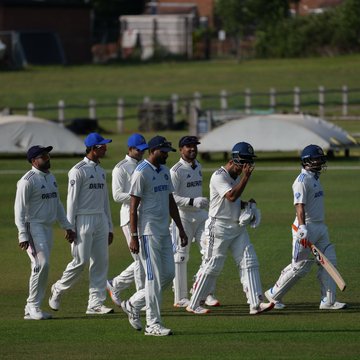
According to new concussions protocols, teams will have to name their substitute players to the match referee before the start of the match according to the following roles.
- One wicketkeeper
- One batter
- One seam bowler
- One spin bowler
- One allrounder
If the replacement player also gets concussed and needs to be replaced, then the match referee will consider a player from outside the five nominatiosn according to the existing like-for-like protocol.
The playing conditions regarding catches have also been updated, with the MCC banned mid air catches (bunny-hop) outside the boundary for clean catches.
The ICC has introduced the stop clock in Test matches to address the issue of slow over rates. The fielding side will be required to begin a new over within a minute after the end of previous over.
Umpires will give two warnings for delays, after which a five-run penalty will be imposed for further infractions. The clock will reset every 80 overs. This change has already been applied in the current WTC cycle.
With the ban on use of Saliva has been in course, umpires are no longer required to change the ball immediately if saliva is found on it. The change is designed to prevent teams from forcing a ball change.
The ball will be replaced if the umpire that its condition has been significantly altered. If there is not major impact, the ball will remain in play will not justify a replacement. However, a five-run penalty will still be awarded to the batting side.
The ICC has updated the DRS protocols in scenarios where the batters is give out but then reviews the decision. If Ultraedge shows no bat contact and the ball has hit the pad, the umpire will check for lbw.
This means that even if ball-tracking returns an ‘umpire call’, the batter will still be given out, unlike in the past when the fallback was automatically ‘not out.’
Apart from these three major changes, there are other chagnes as well. For Example, there is the short-run penalty. In case, the batter is found deliberately running short then a five-run penalty can be imposed on the batting side.

