


The Board of Control for Cricket in India (BCCI) has revised the rules of over-rate offences for the upcoming IPL 2025 season. The board has decided that captains will no longer face match bans.
They will be penalised with demerit points, with a ban being enforced only in extreme cases. During the IPL captains meets held at the BCCI office in Mumbai on March 20, the board has informed all ten franchise that there will be no match bans for slow over rate offences.
The rule similar to that of ICC has been introduced, with demerit points assigned to the captain based on the severity of the offence.
These demerit points will carry over for a period of three years. “The captain will be penalised with demerit points but will not face a match ban for the slow over-rate,” said a source.
According to the rule, the level 1 offence will be charged 25 to 75 percent match fees with demerit points which will be calculated for next three years.
“A Level 2 offence, if exactly deemed serious, will result in four demerit points.”
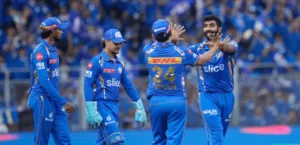
“For every 4 demerit points accumulated, the match referee can impose a penalty, either in the form of a 100 percent fine or additional demerit points. These demerit points could potentially lead to a match ban in the future,” a source in the know said. “But for slow overrate it won’t be a match ban (immediately).”
A couple of captains have been imposed ban in the IPL for slow-over rates. Rishabh Pant had to miss a crucial match for Delhi Capitals against Royal Challengers Bengaluru last season due to his team’s slow-over rate while Hardik Pandya will be missing the opener match of IPL 2025 due to an over-rate offence in the previous season.
“The IPL will continue to implement the Impact Player rule, allowing teams to substitute one player during a match, at least until 2027,” said a source.
The Board of Control for Cricket in India (BCCi) has also amended that DRS clause in the playing conditions. The referral will be applicable for the high weights and wides outside the off-stump.
The 2024 IPL playing conditions state that a player is ‘allowed to review any decision taken by on-field umpires concerning wide or no ball’.
These changes are in addition to rhe revocation of saliva ban and introduction of the two ball rule due to dew.

