

Key takeaways
- Smart lighting and controls also typically provide the most immediate payback at a tennis complex.
- Small operational tweaks can reduce utility spend without impacting play.
- Data-driven decisions can come in use here to choose the appropriate projects and timings.
- A simple plan is better than reacting to each bill in a panic mode.
Why Energy Management is Important in Tennis Multi-Court Facilities
If you operate tennis facilities you feel utility bills more than most. Courts early mornings, late nights, weekends, tournaments Lights stay on for hours. HVAC works overtime in indoor buildings & clubhouses.
At many recreation buildings, lighting and/or HVAC may account for 60 to 70 percent of total electricity consumption. For a 6 court site that may be 180,000 to 250,000 kWh per annum. Double the courts, and you often get close to doubling that number if you are careful.
I worked with one municipal tennis complex that discovered that their “just leave it on” disposition cost them about 20,000 kWh a year. Nothing fancy. Just lights and fans going with no players at the courts. Once they had seen that in black and white, behaviour changed fast.
So the question comes to be: where can you cut without players noticing anything but maybe better comfort and visibility?
Creating an Energy Management Plan for Your Tennis Complex
You do not need a strategy of 60 pages. Start simple. Decide what you want to track: cost per court, kWh per court hour or maybe peak demand on your worst month. Pick one or two metrics and stick to them.
Then take a walk to your tennis facilities. Literally. Early morning week, busy evening closing time. Think of every tennis court, every light, every fan, every vending machine that is not turned off when nobody’s using it. That first walkthrough will often identify 10 percent savings due to just behavior and schedule changes.
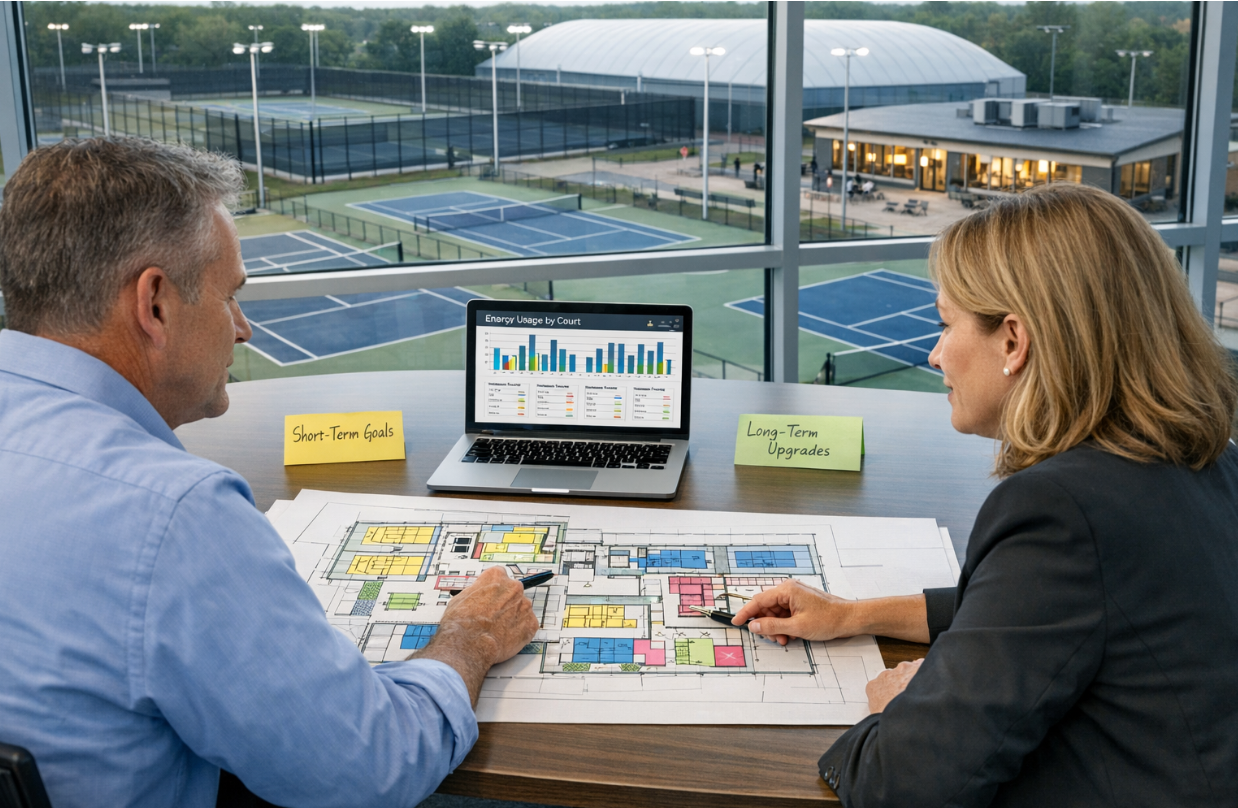
If possible, take 12 to 24 months of bills and put them into a simple basic spreadsheet. I like to make a Judaism of big changes: new league, added indoor tennis court, major repair. You start to see patterns. One private club I assisted said that they noticed a sudden 15 percent increase that originated from a failed control for their lobby lighting system. Nobody recognized it until we graphed it.
READ: Top 7 Most Popular Sports in the World – Listed No. of Fans
Lighting: The Biggest Lever for Energy Savings
For most of the tennis complexes, lighting is the dominant component. A single older style metal halide fixture over a tennis court may consume 1000 watts. Multiply that by 8 or 12 fixtures per court * 6 or 12 courts * 4 to 6 hours per night. The math gets ugly quickly.
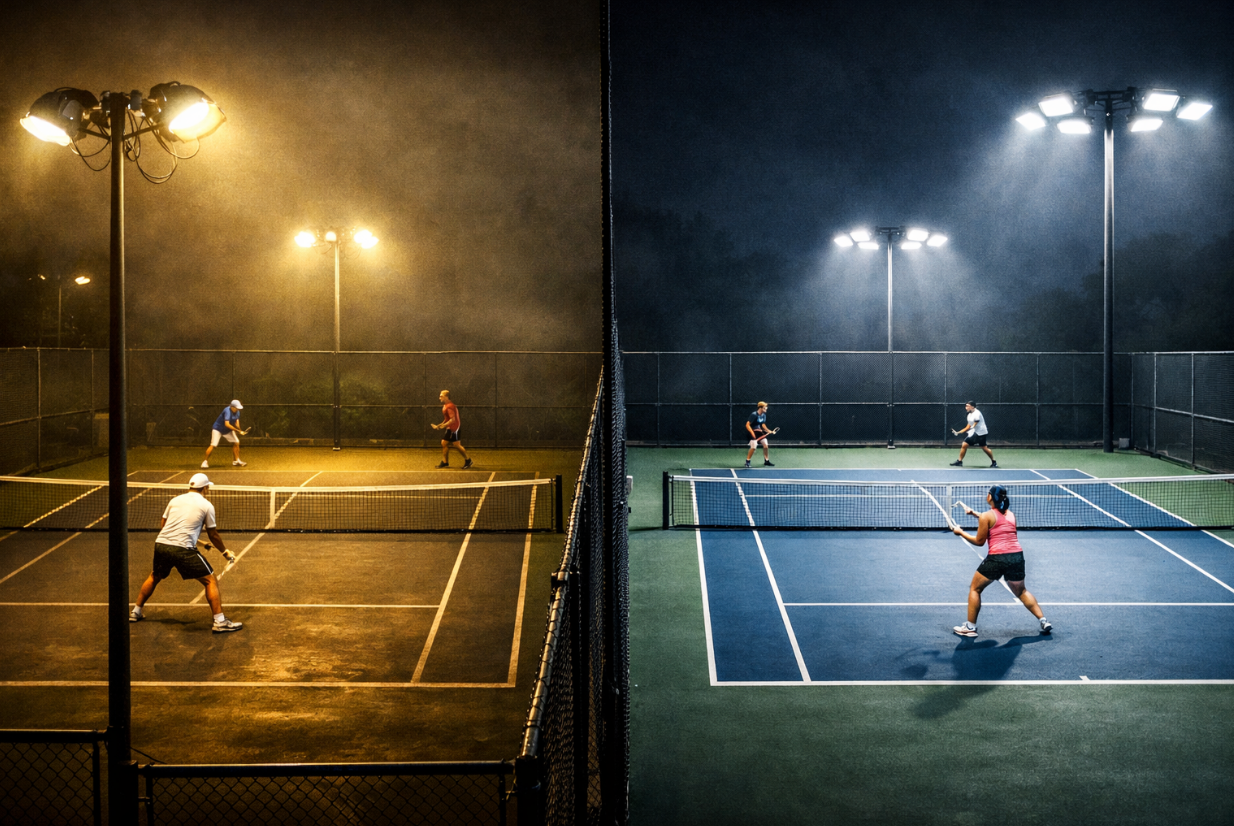
When you compare that to modern LED options, the gap is large. I have seen a 6 court outdoor site go from about 210,000 kWh per year for tennis court lighting lighting to around 90,000 after a full lighting system retrofit. Same light levels, improved uniformity, less dark spots.
Energy Efficiency for Sports Facilities guidance provides you with a good resource that you can reference this point to. It allows your reader to verify the claim with a document he could check.
One director told me how it surprised them to find that maintenance savings were higher than the power bill. No more season-to-season rental of lifts to change out lamps. No more mid-season color shifts where one tennis court looked yellow and the next looked white. That alone freed staff time for actual operations instead of chasing burned out lamps.
Optimizing Controls for LED Tennis Court Lights
Even with efficient fixtures, controls determine whether or not you save or waste. One way I like to think about courts is to see them zoned out in pairs, at least. If only two courts are hosting a late match you should not light the entire eight. Simple contactors coupled to a reservation system can do that.
On one project, we connected LED tennis court lights to an online booking tool. When a player was reserving a tennis court, lights would go on 10 minutes before and off 10 minutes after. No more “we forgot to turn them off” at midnight. That single change reduced evening run time by some 25 percent.
Lower light levels for practice and full levels for tournaments may also be used. Some operators are worried that players will complain. In my experience, if you’re consistent on each tennis court and don’t glare, for the most part they just appreciate that they are able to see the ball well.
HVAC and Indoor Environment for Indoor Tennis Complexes
Indoor tennis is a different problem. You have a very large volume of air, you have a high ceiling and you have people moving all around the place. Heating or cooling that space is taking serious power. In many indoor sports buildings, the total use of the heating, ventilation and air conditioning (HV) systems alone can account for 30 to 40 percent.
I went by an indoor tennis court facility where they keep the building at 70 degrees year round “because players like it.” In reality, when we did ask the captains of the leagues, for the most part they were fine with 74 in summer and 66 in winter, provided you can have humidity under control. That little change, in addition to night losses, dropped their gas and electric cost about 12 percent.
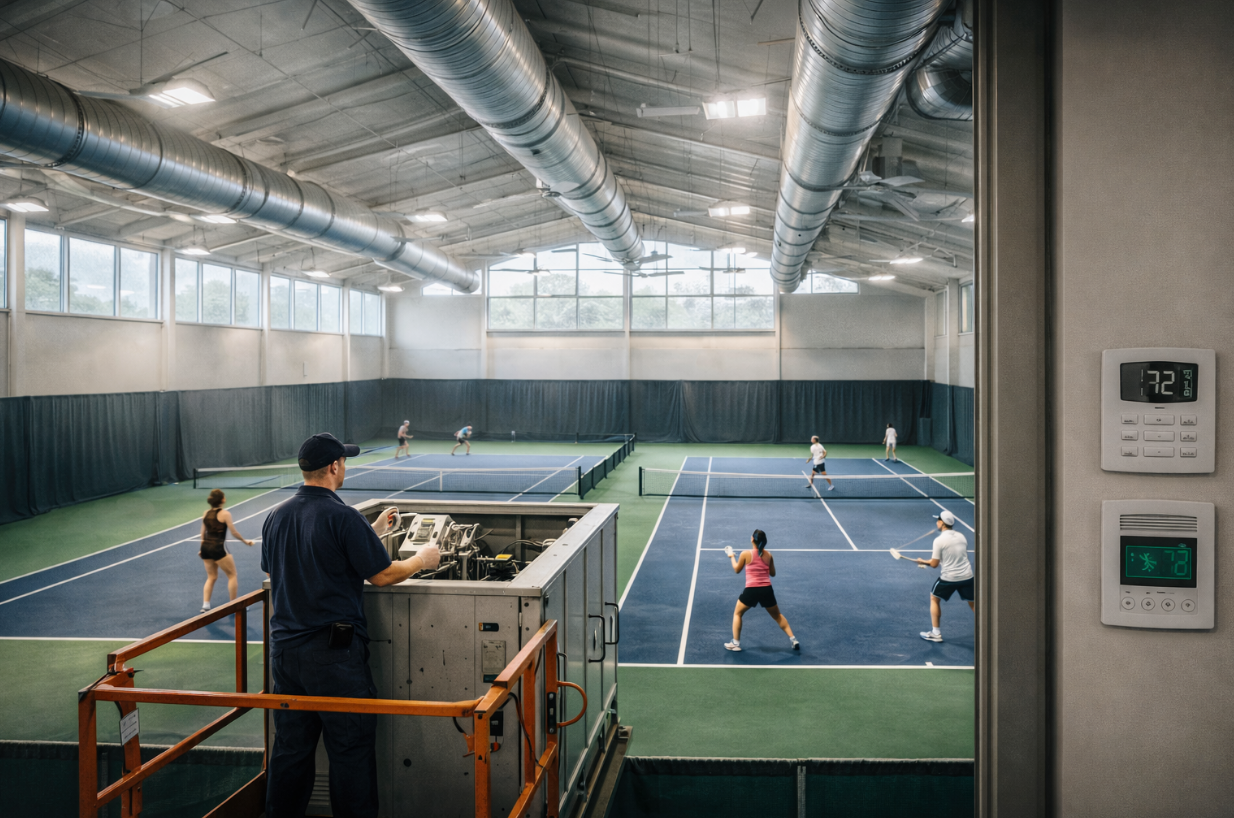
Start with basics. Check thermostats, schedules and filters. Cover obvious gaps around doors. If you are planning a major upgrade, examine high efficiency units and possibly destratification fans to pull down the warm air from the ceiling. Those are not glamorous projects, but they are important.
The ASHRAE’s Advanced Energy Design Guide for K-12 School Buildings recommends strategies like optimized temperature setpoints, night setbacks and high-efficiency HVAC machinery for reducing energy consumption in large-volume gymnasiums and the like. Many of these best practices translate directly to indoor tennis complexes, where intelligent control of temperature and ventilation can reduce energy consumption from heating, cooling and other mechanical systems without compromising comfort.
Court Scheduling, Operations and Policies Against Energy Waste
Scheduling may sound like the tennis admin job and not an energy tool but it makes a lot of difference. If you spread your bookings out across every tennis court you end up lighting and conditioning the entire complex for a few players.
One private club I worked with began to group evening matches in blocks. Courts 1 to 4 first, then 5 to 8. That basic policy allowed them to close half of the tennis complex earlier most nights. Nothing new bundle of equipment, just another way of thinking of the schedule.
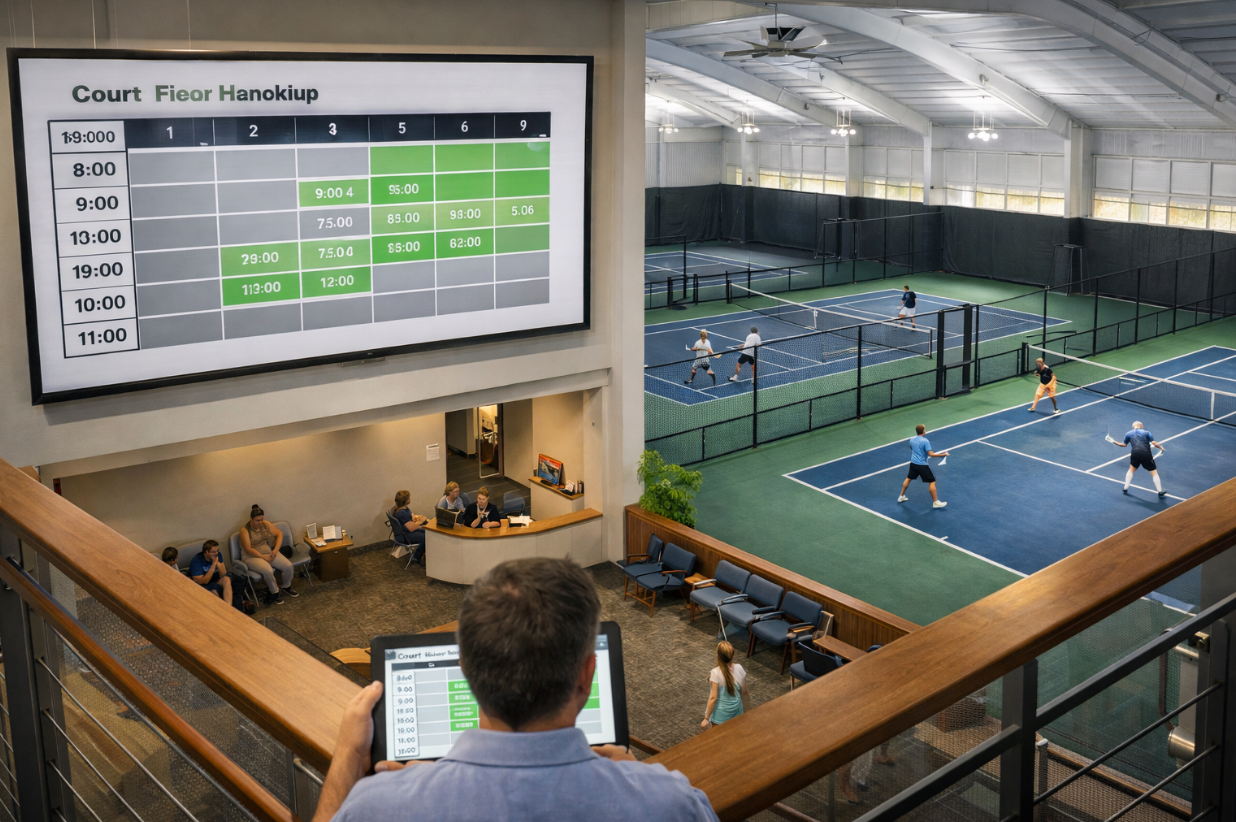
Reservation systems help also. For confirmation and removal of no show tracking, you can auto cancel lights and HVAC for empty slots. I like to create a mini end-of-the-day checklist for staff, such as walking every tennis court, locker room, and office, and turning off what does not need to run overnight. It sounds basic because it is.
Building Envelope and Support Spaces
The building around your tennis courts are the silent cost drivers. Poor insulation, leaky doors and old windows cause HVAC to work hard. During one audit of an indoor tennis facility, we discovered a loading door that remained cracked open “for fresh air.” It was more like a hole in the wall. Fixing that and putting in some weatherstripping paid back in one season.
Support spaces matter too. Locker rooms and showers consume hot water. Low flow fixtures can reduce the amount of gallons substantially and this results in a reduction in gas or electric consumption on water heaters. If you ever do open walls or ceilings for repair, that is the time to add insulation, not some time down the road.
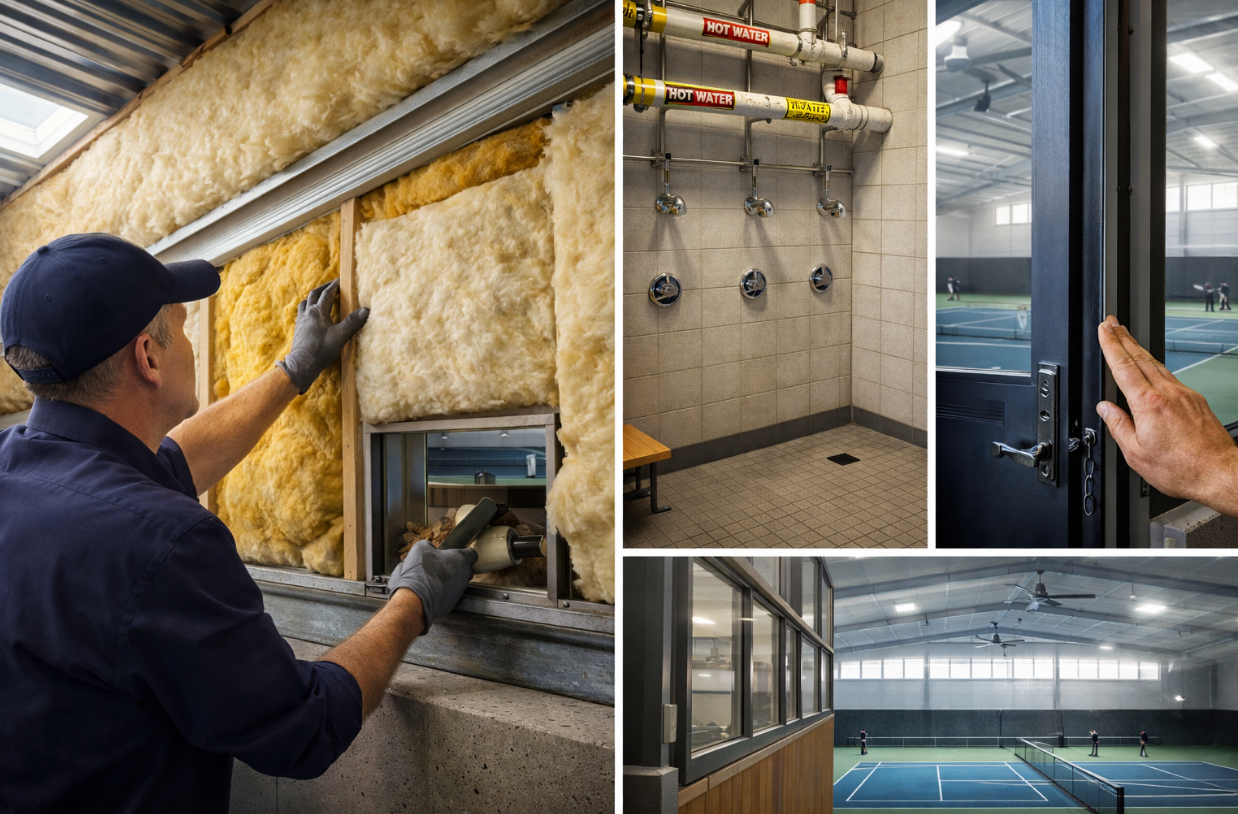
I have seen owners concentrate on the major playing area of a tennis court and overlook the rest of the clubhouse, pro shop and offices. Right sizing HVAC there, using task lighting, shutting off displays overnight may add up. None of this strikes you as dramatic, but taken together it supports your bigger efforts.
READ: Wimbledon Prize Money – How Much the Winner Gets?
Using Data, Controls and Technology Wisely
Technology is helpful, but only if the people use it. I have seen beautiful control panels that nobody touches because they are so intimidating. So start small. Timers on exterior lighting. Programmable thermostats with clear schedules. Quarterly reviews to tinker for season changing.
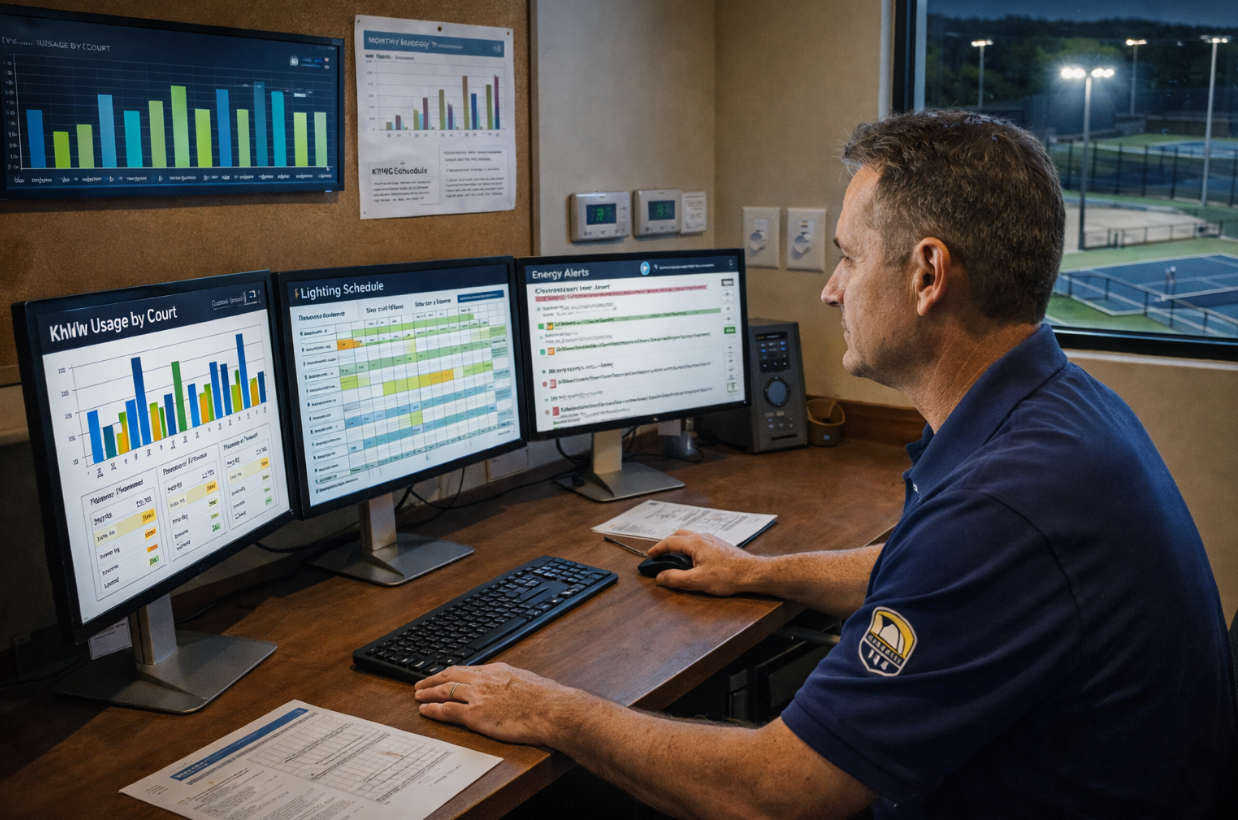
Larger tennis facilities may be able to justify a building automation system. If you go that route, insist on some training. Twice. Once at installation, and then later some months later when the questions of real life arrive. Ask for easy reports – how many Kwh and when over a day; which tennis court or zone runs for the longest.
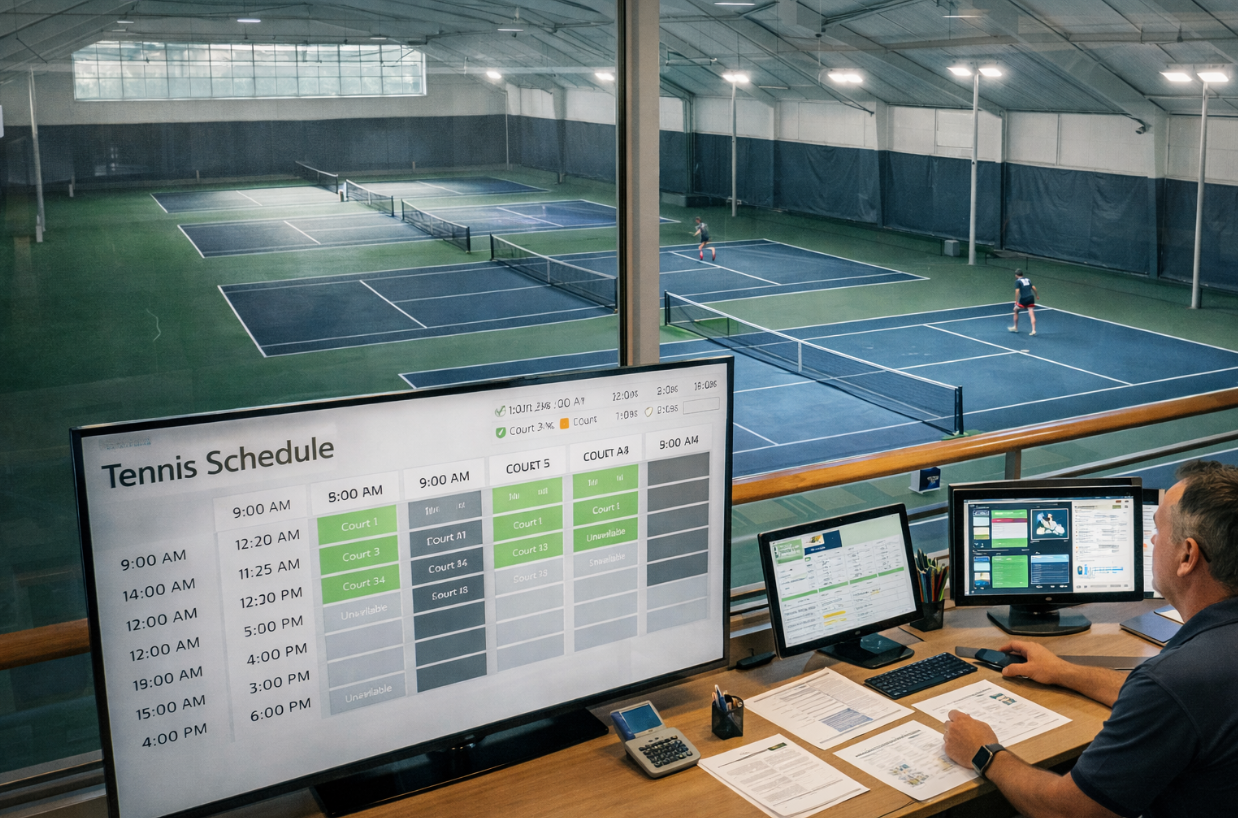
One multi court site I was supporting, through monitoring, noticed that their lobby and hallway lights were left on all night. No one had noticed that the schedule was incorrect following a software update. Self-correcting that one problem shaved off a few thousand kWh a year. Data did not solve everything, but indicated us to the right door.
Budgeting, Incentives and Phased Upgrades
You probably cannot do tennis projects all at once. So rank them. I usually would put quick operational fixes first, then lighting, then HVAC, then envelope work. Lighting often provides the best combination of payback and visible improvement.
Check for a rebate from your utility, particularly for LED sports lighting, controls or high efficiency HVAC. I have seen projects in which the incentive was 20 to 40 percent of the upfront cost. That can make three a five year payback.
Think in phases. Year one: scheduling, controls and some small retrofit jobs. Year two: Major lighting upgrade. Year three and beyond:HVAC replacements based on end of life. If there is some point where solar panels make sense for your roof, or parking canopy, you can work this in on top of that once the core loads have been trimmed out.
Communicating Energy Efforts Through Players and Stakeholders
People respond better if they know why you changed something. If you adjust light levels a little bit or fiddle with temperatures, tell your players. A brief note on the website or a note in the lobby does the trick.
One of the directors at a tennis club I know shared pre and post photos of their new tennis court lighting and an easy chart with the projected savings. Appreciated by club members that the dollars were put back into the resurfacing of courts rather than into the pockets of individual club members.
You can even make your energy work a selling point. Schools and tournament organizers prefer venues that are responsible for costs and comfort. It is a sign that you operate the tennis facility with a long term approach, not for the next season.
Common Errors Tennis Complexes Make Regarding Energy Management
I see a few patterns repeat. Over lighting is a big one. More light is not always a better thing. If you are putting out more light than is recommended, you are wasting power and creating more glare, which in fact may actually deteriorate play.
Another error is “set and forget” controls. Schedules 3 years ago are still running around even if your tennis programming changed. Daylight savings changes, but nobody adjusts timers. Suddenly your exterior lights are left on an hour longer, every day.
Finally, little maintenance problems lingered. A burnt out occupancy sensor in a storage room. A door which does not close properly. A fan that runs 24/7. Each of them appears to be pretty minor, but together they chip away at what you’ve gained. I believe the key is getting into a habit of noticing and fixing these in quick succession.
Action Plan: Energy Costs Management at the First 90 Days
If you are looking for a starting roadmap, here is one. First 30 days – collect bills, take a walk, and make a list of obvious problems for all tennis courts and support spaces. Capture photos. Ask staff what they find problematic about the building.
Days 31 to 60: fix the easy stuff. Alter the schedules, repair controls, close the gaps, and train employees about a simple shutdown routine. And you should already see runtime for lights and HVAC change for the better.
Days 61 to 90: get quotes on a lighting upgrade especially if you are still on the older fixtures. Look at led tennis options, controls, maybe even solar panels if your roof is right for it. With to build a three year plan, rough costs and expected energy savings. It will not be perfect but at least it is a direction to go instead of guessing month by month.
FAQs about Managing Energy Costs in Tennis Multi-Court Complexes
1. What is the biggest source of energy use in a tennis complex?
For most sites, court lighting is the largest single load, followed by HVAC in indoor buildings and larger clubhouses.
2. How much can I save by switching to LED court lighting?
Many facilities see 50 to 70 percent lower lighting energy use per tennis court, plus fewer lift rentals and lamp changes.
3. Do energy upgrades hurt lighting quality or player experience?
If you design around proper light levels, uniformity, and reduced glare, players usually notice better visibility and more consistent play.
4. How do I know which upgrades to do first?
Start with an informal audit and basic tracking, then prioritize projects with short payback and clear impact, like lighting and controls.
5. Are there grants or rebates for tennis facility energy projects?
Many utilities and some local programs offer incentives for lighting, controls, and HVAC. Check with your provider and ask vendors for help.